Sharjah eyes Ethiopia investment opportunities amid growing UAE-Africa trade Saudi Arabia to raise minimum wage threshold Bahrain poised for V-shaped rebound in 2027 after energy sector setback US bank J.P. Morgan facilitates Syrian deal for Saudi oil products Abu Dhabi advances UK investment ties through London forum, 56 meetings Abdullah bin Zayed joins trilateral meeting with FMs of US, India Dubai's GDP reaches $129bln in H1 2026 Saudi economy remains resilient despite Middle East conflict, SAMA governor says Middle East economy set for strong 6.6% rebound in 2027: IMF Technology, start-ups can double India-UAE trade to $200bln: Forum Dubai Cashless Strategy exceeds 2026 targets UAE to participate in World Bank Group and IMF Annual Meetings in Bangkok UAE President receives phone call from Canadian Prime Minister Etihad Rail putting UAE’s property market on a new track, says expert Sharjah recorded 45% growth in FDI projects in 2025 Saudi Arabia plans IPO, short-selling reforms within 90 days: CMA NBB expands Bahrain real estate partnerships with two new deals His Majesty Sultan Haitham reviews economic, investment projects at SEZ in Duqm Ras Al Khaimah Chamber, Greater Miami Chamber of Commerce strengthen trade, investment ties Saudi ranks among world's top countries in trade indicators UAE deploys $272mln fund to bolster critical industries Etihad Rail, AD Ports launch direct Fujairah-Abu Dhabi freight service Sharjah-Oman logistics corridor cargo value jumps 66% to $463mln Saudi Arabia seeks greater private-sector role in industrial growth Oman Islamic banking assets top over $24bln Salama, Ajman Bank establish strategic partnership CBUAE, Mastercard conclude programme to strengthen national capabilities in fraud risk management Qatar Chamber enhances trade relations with Malaysia's Malacca State Saudi business confidence climbs to 56.7 points on industry, services gains Qassim Cement to acquire 100% of A-Mix for $17.3mln

Log in

عربي

Media Centre

Home » Media Centre

Emerging economies will continue driving agricultural markets: OECD-FAO Agricultural Outlook

Emerging economies will continue driving agricultural markets: OECD-FAO Agricultural Outlook

Emerging economies will continue driving agricultural markets: OECD-FAO Agricultural Outlook

Jul 04, 2024

PARIS - Emerging economies have increasingly driven global agricultural market developments over the last 20 years and are projected to continue to do so over the next decade, according to a report released on Tuesday by the Food and Agriculture Organisation of the United Nations (FAO) and the Organisation for Economic Cooperation and Development (OECD).

The OECD-FAO Agricultural Outlook 2024-2033 is the key global reference for medium-term prospects for agricultural commodity markets, and this year’s edition marks the 20th edition of the joint publication.

For two decades, the report has analysed trends in the demographic and economic drivers of agricultural commodity supply and demand, projected the shifts in production and consumption locations, and assessed the resulting changes in international agricultural trade patterns.

A notable shift expected over the coming decade is the increasing role of India, Southeast Asia and Sub-Saharan Africa and the declining role played by China. While China accounted for 28 percent of growth in global consumption of agriculture and fisheries in the previous decade, its share of additional demand over the coming decade is projected to fall to 11 percent, due to declining population, slower income growth and stabilisation of nutrition patterns.

India and Southeast Asian countries are projected to account for 31 percent of global consumption growth by 2033, driven by their growing urban population and increasing affluence.

Among predominantly low-income regions, Sub-Saharan Africa is projected to contribute a sizeable share of additional global consumption (18 percent), primarily due to population growth-driven demand for food.

Total agricultural and fisheries consumption is projected to grow by 1.1 percent annually over the next decade, with nearly all of the additional consumption projected to occur in low- and middle-income countries.

Food calorie intake is expected to increase by 7 percent in middle-income countries, largely due to greater consumption of staples, livestock products and fats.

Calorie intake in low-income countries will grow at 4 percent, too slowly to achieve the Sustainable Development Goal target of zero hunger by 2030.

“The Outlook confirms the need to implement strategies that bridge productivity gaps in low- and middle-income countries to increase domestic production and boost farmers’ incomes,” said FAO Director-General QU Dongyu.

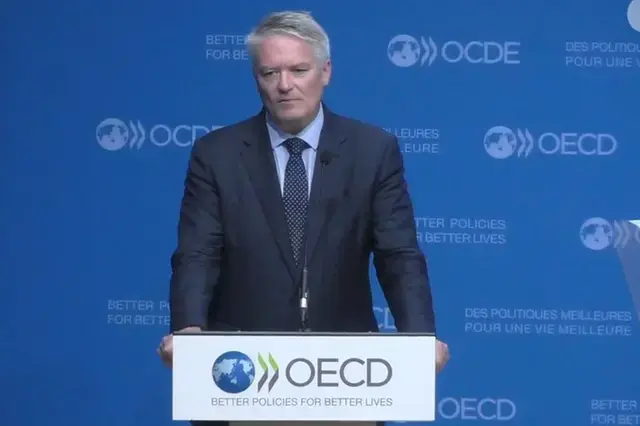
OECD Secretary-General Mathias Cormann stated, “Over the coming decade, the volumes of agricultural commodities traded globally is expected to increase between net exporting regions and net importing regions, but with regional shifts reflecting increased global consumption in India and Southeast Asian countries,”

He added that well-functioning agricultural markets, reducing food loss and waste, and more productive and less polluting forms of production will remain critically important for global food security and to ensure rural livelihoods can and do benefit from global agrifood value chains.